
Choosing what to wear to a New England wedding can be surprisingly complicated.
A formal celebration in a Boston museum requires something different from a ceremony beside a New Hampshire lake. A September afternoon may begin in warm sunshine and end with guests reaching for coats. A mountain wedding can be significantly cooler than the forecast in town, while a coastal venue may remain windy even on a beautiful summer day.
The invitation’s dress code should always be your starting point. From there, consider the season, venue, ceremony setting, weather, and any cultural or religious customs.
This wedding guest attire guide will help you arrive appropriately dressed without sacrificing comfort or personal style.
Begin with the Wedding Dress Code
If the couple has provided a dress code, follow it. The wording may appear on the invitation, wedding website, details card, or welcome-event information.
When no dress code is listed, use the venue, time of day, and invitation style for clues. An evening wedding at a luxury hotel is likely to be more formal than an afternoon celebration at a farm.
When you are still uncertain, it is usually better to be slightly overdressed than noticeably underdressed.
White-Tie Wedding Attire
White tie is the most formal wedding dress code, although it is uncommon for modern New England weddings.
Traditional white-tie attire includes:
- A formal floor-length evening gown
- An exceptionally formal pantsuit or evening ensemble when appropriate
- A black tailcoat with matching trousers
- A white formal shirt, white vest, and white bow tie
- Highly polished formal shoes
- Elegant jewelry and restrained accessories
If a couple requests white tie, follow the instructions carefully. This is not the occasion to reinterpret the dress code as ordinary formalwear.
Black-Tie Wedding Attire
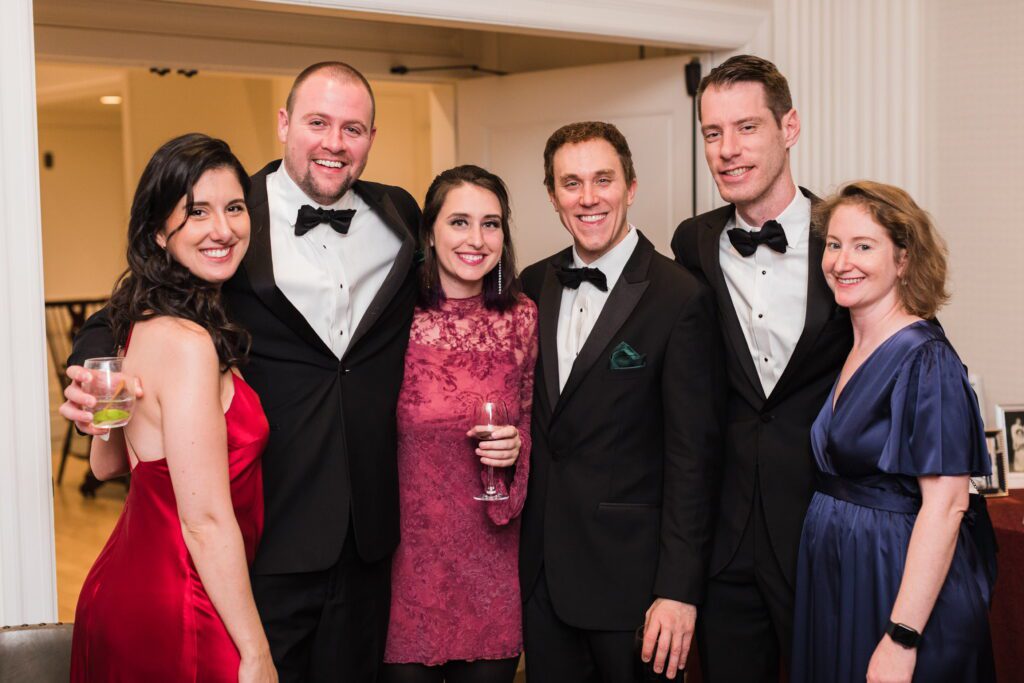
Black tie usually indicates a formal evening wedding.
Appropriate options include:
- A floor-length evening gown
- An elevated formal pantsuit
- A refined full-length jumpsuit in a luxurious fabric
- A traditional black or midnight-blue tuxedo
- A formal white shirt and black bow tie
- Polished formal shoes
Luxurious fabrics such as silk, satin, velvet, chiffon, and crepe work particularly well.
For a winter black-tie wedding, add a polished wool coat, faux-fur wrap, velvet jacket, or formal shawl. Avoid relying on a casual everyday coat if photographs or portions of the event will take place outside.
Black-Tie Optional or Formal Attire
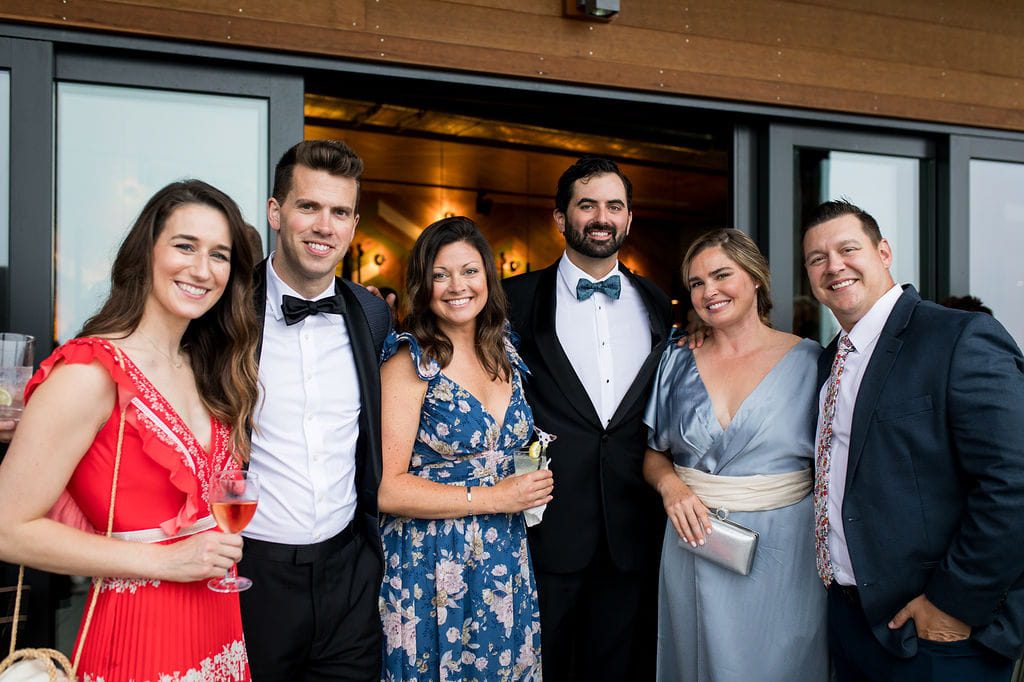
Black-tie optional gives guests more flexibility while still calling for an elevated look.
Suitable choices include:
- A floor-length gown
- A sophisticated midi or cocktail dress
- An elegant jumpsuit or formal pantsuit
- A tuxedo
- A dark, well-tailored suit with a dress shirt and tie
A tuxedo is welcome but not required. The goal is to look refined and evening-appropriate without necessarily reaching full black-tie formality.
Cocktail Wedding Attire
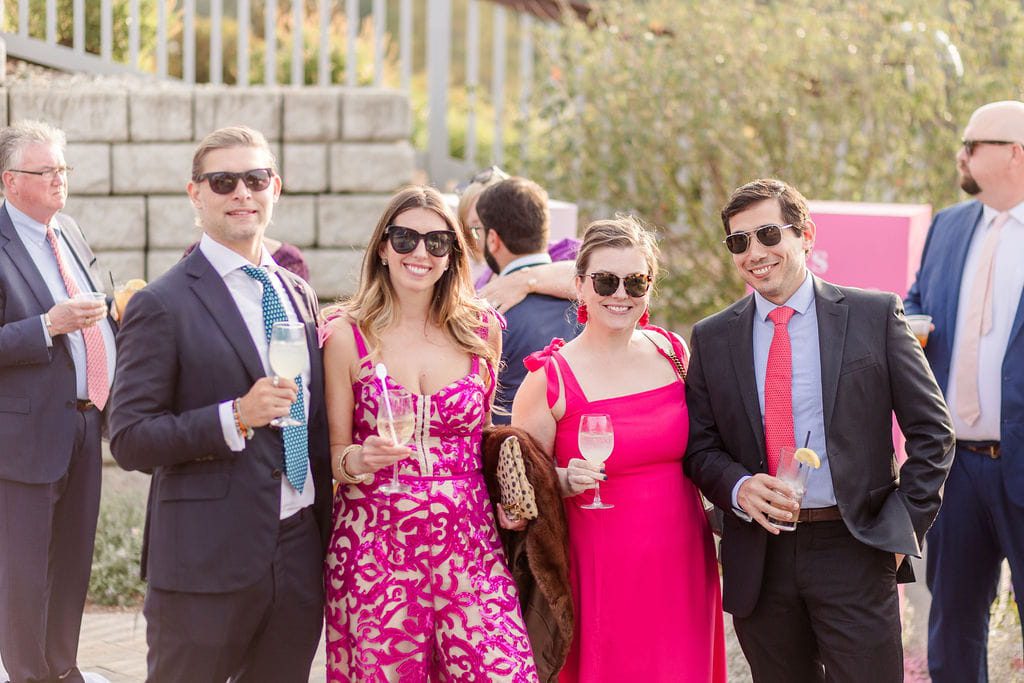
Cocktail attire is polished and celebratory without being as formal as black tie.
Consider:
- A knee-length, tea-length, or midi dress
- A dressy jumpsuit
- Elevated separates
- A tailored suit
- Dress trousers with a jacket, shirt, and tie
- Polished heels, flats, loafers, or dress shoes
Cocktail attire is one of the most common wedding dress codes because it allows guests to express their style while still looking appropriately dressed for the occasion.
A tuxedo will usually look too formal, while jeans and casual sundresses will look too relaxed.
Semi-Formal or Dressy-Casual Attire
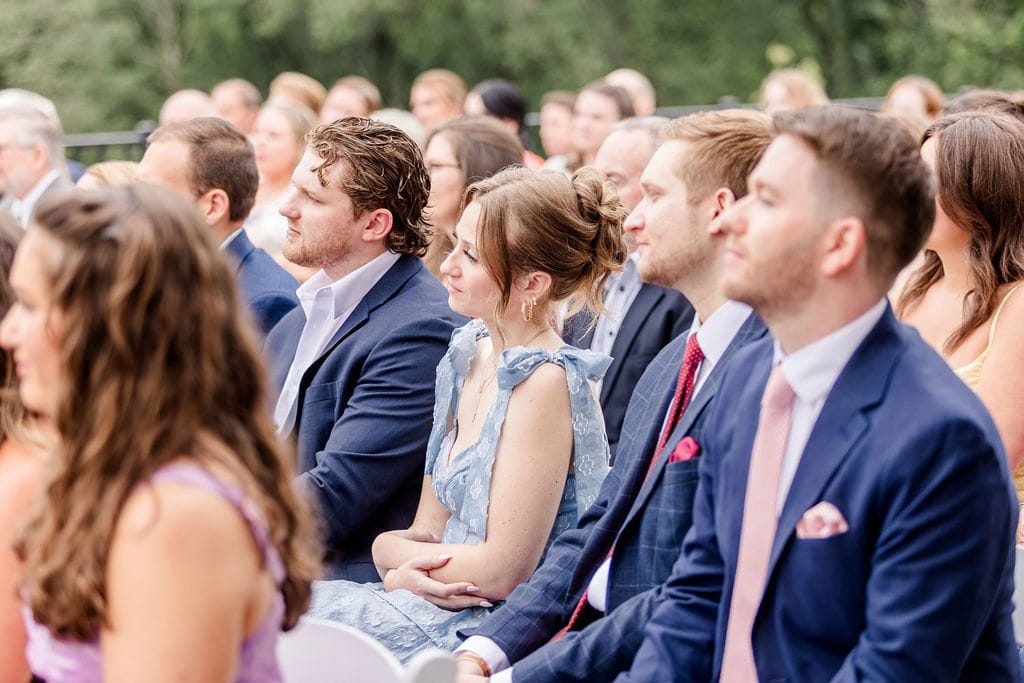
Semi-formal and dressy casual fall between cocktail and casual attire.
Appropriate choices include:
- A midi, wrap, or knee-length dress
- A polished jumpsuit
- A dressy skirt or trousers with an elevated top
- Dress pants or chinos with a collared shirt
- A blazer or suit jacket
- A tie when the time and venue suggest greater formality
The time of day can help determine how dressy to go. An evening semi-formal wedding generally calls for darker colors and more polished fabrics. A daytime garden wedding can support lighter colors, prints, and softer silhouettes.
Unless the couple explicitly requests denim, jeans are generally too casual for a semi-formal wedding.
Casual Wedding Attire
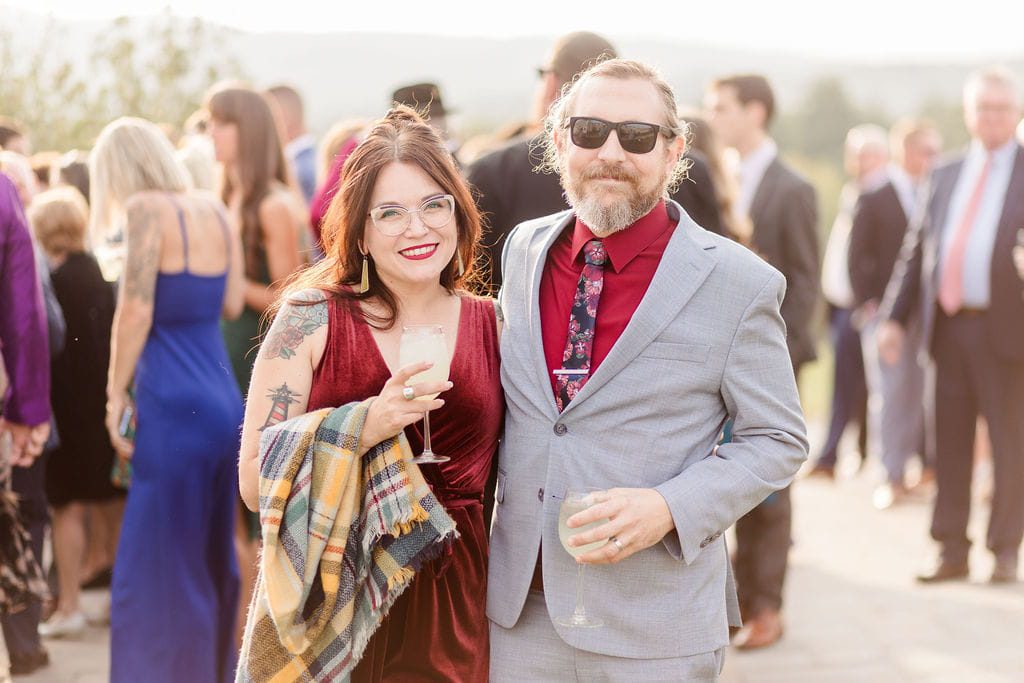
“Casual” does not mean everyday clothing. It means relaxed but still intentional and appropriate for a meaningful celebration.
Consider:
- A sundress or simple midi dress
- A polished jumpsuit
- A skirt or tailored trousers with a blouse
- Chinos or dress trousers with a button-down shirt
- A casual blazer
- Loafers, flats, wedges, or dressy sandals
Avoid athletic clothing, distressed denim, graphic T-shirts, flip-flops, and anything you would wear to complete errands or yardwork.
What to Wear by New England Wedding Venue
The same dress code can feel slightly different depending on the venue.
Mountain Wedding
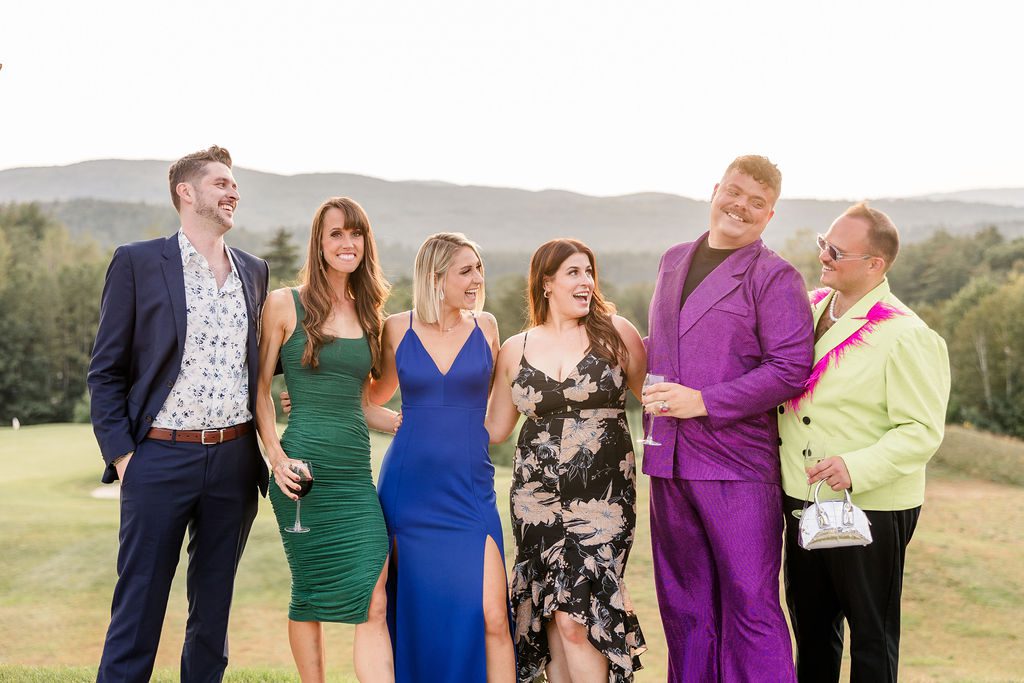
Mountain weather can change quickly, and higher elevations are often cooler than nearby towns.
Bring:
- A warm but polished layer
- Shoes suitable for stone, grass, or uneven ground
- A coat or wrap for the evening
- Sunglasses for an outdoor daytime ceremony
- An umbrella if rain is possible
Avoid narrow stilettos if the ceremony requires walking on grass, gravel, or mountain paths.
Barn or Farm Wedding
Rustic surroundings do not automatically make a wedding casual. Follow the invitation’s dress code while selecting shoes and fabrics that work with the setting.
Good choices include:
- Block heels, wedges, boots, loafers, or flats
- Dresses and trousers that will not drag on the ground
- A jacket or wrap for the evening
- Fabrics that can tolerate grass, dust, and changing temperatures
A barn wedding can still be formal, so do not default to jeans or overly casual clothing unless invited to do so.
Lakefront Wedding
Lakefront settings can be breezy and cooler after sunset.
Consider:
- Lightweight layers during the day
- A shawl, jacket, or sweater for the evening
- Wedges, block heels, flats, or stable dress shoes
- Fabrics that move comfortably in the breeze
- Insect repellent that will not stain clothing
If guests will walk on docks, lawns, or beaches, prioritize stable footwear.
Coastal or Beach Wedding
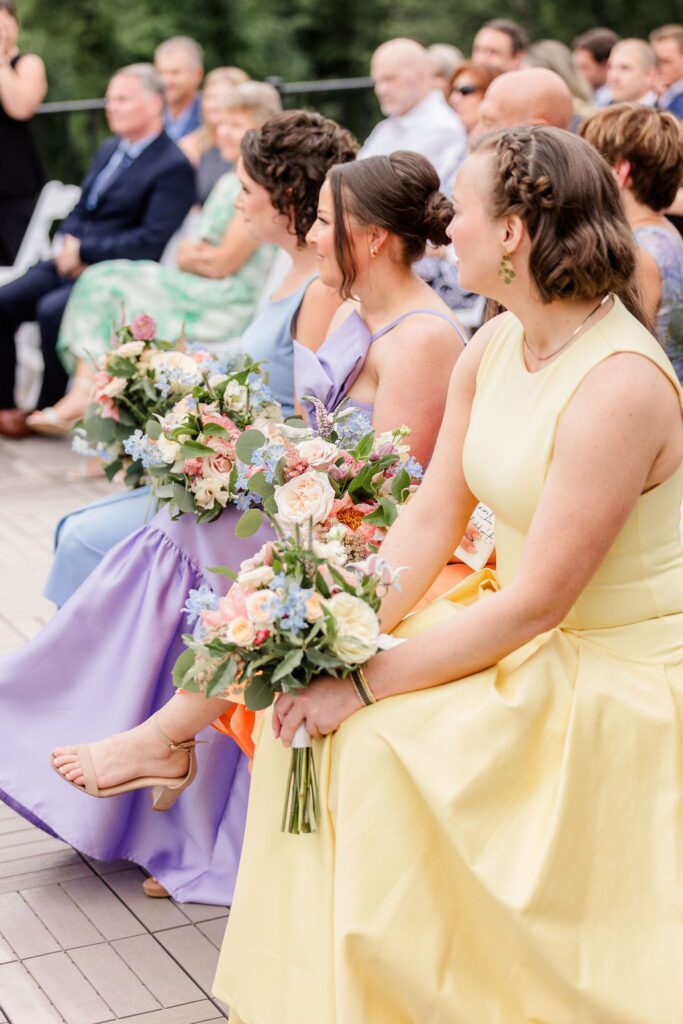
Choose breathable fabrics and shoes that can handle sand, grass, or wooden walkways.
Good options include:
- Linen, cotton, chiffon, or lightweight silk blends
- Flowing midi or maxi dresses
- Lightweight suits
- Dressy sandals, wedges, loafers, or flats
- A wrap or jacket for the ocean breeze
A beach wedding is still a wedding. Swimwear, rubber flip-flops, and beach cover-ups are generally inappropriate unless the couple specifically plans a swim or casual beach activity.
Museum, Hotel or Historic Estate Wedding
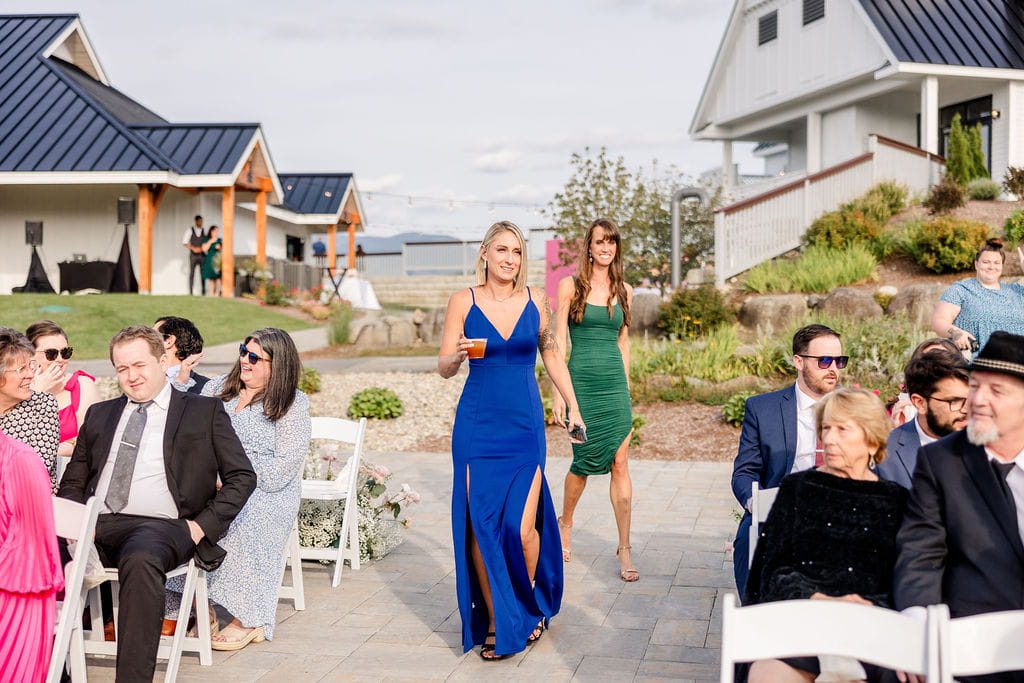
These settings often call for cocktail, formal, or black-tie attire.
Consider:
- Structured or refined silhouettes
- Luxurious fabrics
- Tailored suits or tuxedos
- Elegant dresses, jumpsuits, or pantsuits
- Polished shoes and accessories
When the ceremony is held in a religious space before the reception, bring a wrap or jacket if modest coverage may be expected.
What to Wear by Season
New England’s seasons should influence both the appearance and practicality of your outfit.
Spring Wedding Attire
Spring weather can range from warm sunshine to cold rain in a single afternoon.
Consider:
- Pastels, floral prints, soft greens, blues, or neutrals
- Light layers
- A trench coat or polished raincoat
- Closed-toe shoes or block heels for wet ground
- An umbrella that is simple enough to carry into photographs
Do not assume that a May wedding will be warm, especially in northern New England or the mountains.
Summer Wedding Attire
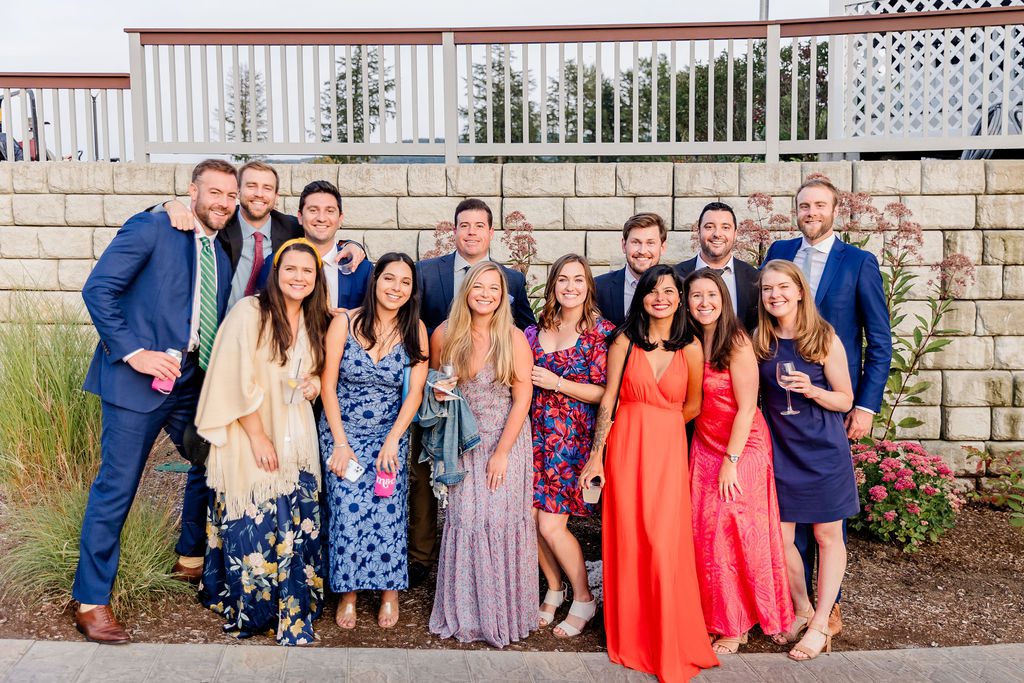
Choose breathable fabrics that allow you to remain comfortable through an outdoor ceremony and dancing.
Consider:
- Linen, chiffon, cotton blends, lightweight wool, or silk
- Brighter colors and seasonal prints
- Dressy sandals, wedges, flats, or loafers
- A lightweight jacket for coastal or mountain venues
- Sunscreen that will not transfer onto formal clothing
Avoid fabrics that trap heat, particularly when the ceremony or cocktail hour will take place outdoors.
Fall Wedding Attire
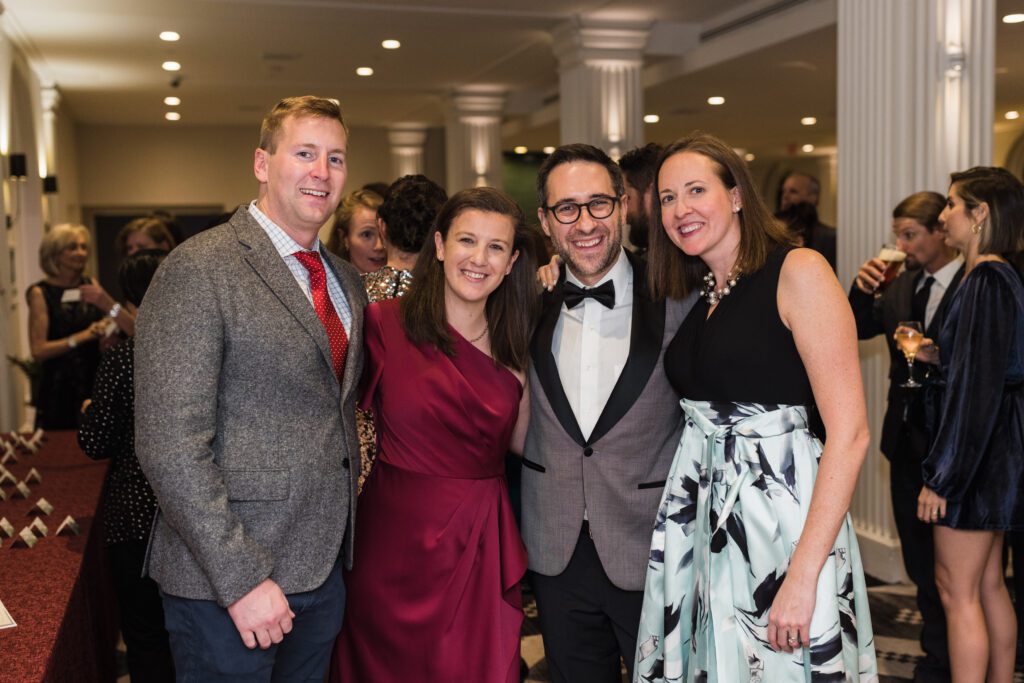
Fall is one of New England’s most popular wedding seasons, but temperatures can change dramatically after sunset.
Consider:
- Jewel tones, earth tones, navy, forest green, burgundy, or rust
- Velvet, satin, crepe, jacquard, or lightweight wool
- Closed-toe shoes, boots, or block heels
- A shawl, jacket, or tailored coat
- Layers that can be removed during the reception
Do not rely on the afternoon temperature when choosing your outfit. An outdoor October cocktail hour can become cold quickly.
Winter Wedding Attire
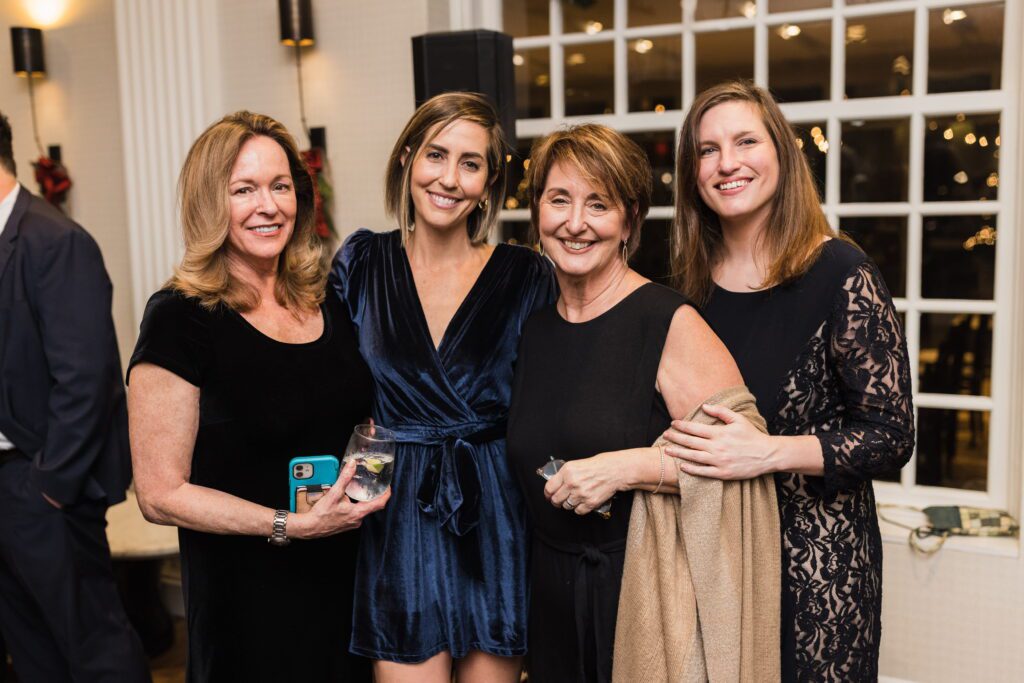
Winter weddings offer an opportunity for richer colors, heavier fabrics, and dramatic formalwear.
Consider:
- Velvet, satin, wool, brocade, or heavier crepe
- Long sleeves or full-length silhouettes
- Jewel tones, metallics, navy, black, or deep neutrals
- A formal coat, wrap, cape, or faux-fur layer
- Weather-appropriate shoes for arrival
- A separate pair of formal shoes for the ceremony and reception
Keep snow, ice, and salted walkways in mind. It is perfectly reasonable to arrive in boots and change once inside.
Can You Wear Black to a Wedding?
Yes. Black is appropriate for most modern weddings.
A black dress, suit, jumpsuit, or formal ensemble can be elegant and versatile. Style it according to the season and dress code so it feels celebratory rather than somber.
The exception would be a cultural celebration where black has a specific meaning or a couple who explicitly requests a different color palette.
Can You Wear White to a Wedding?
Unless the couple requests it, avoid outfits that are entirely or predominantly white, ivory, cream, or bridal in appearance.
A print containing a small amount of white is generally different from wearing a white dress. The question is whether the outfit could reasonably be mistaken for bridal attire in person or in photographs.
If you have to debate whether an outfit looks too bridal, choose something else.
Also avoid matching the wedding party intentionally unless the couple has asked guests to follow a particular color palette.
Respect Religious and Cultural Expectations
If the ceremony takes place in a house of worship, research or ask about attire expectations.
Depending on the faith or culture, guests may need to consider:
- Covered shoulders or arms
- Longer hemlines
- Head coverings
- Removing shoes
- Specific colors or garments
- Different expectations for the ceremony and reception
When unsure, ask the couple or consult the wedding website rather than making assumptions.
Practical Items New England Wedding Guests Should Bring
Even the most beautiful outfit will not help if you are uncomfortable all evening.
Depending on the season and venue, consider bringing:
- A polished jacket, wrap, or coat
- An umbrella
- Sunglasses
- Sunscreen
- Insect repellent
- Heel protectors
- A second pair of shoes
- Blister bandages
- A lint roller
- A small stain-removal pen
Keep these items discreet and avoid carrying so much that you are managing bags throughout the wedding.
The Simplest Rule for Wedding Guest Attire
Honor the dress code, respect the setting, and dress as though the celebration matters.
You do not need to abandon your personal style or purchase something extravagant. Your outfit simply needs to reflect the formality of the event, function in the venue and weather, and keep the focus where it belongs: on the people getting married.
Planning a New England Wedding?
Clear guest communication is part of creating a comfortable, well-planned wedding experience.
Inked Events helps couples select venues, establish dress codes, develop wedding websites, manage guest logistics, and plan celebrations throughout New Hampshire and New England.
Schedule your complimentary consultation →
Inked Events is a New Hampshire wedding planning and design company serving couples throughout New England. NH Union Leader Readers’ Choice Winner, 2025 and 2026.


